


Nestled in lush greenery, Ankokuronji is an ancient temple with a rich history and deep traditions dating back to its founder, Nichiren.
Nestled in lush greenery, Ankokuronji is an ancient temple with a rich history and deep traditions dating back to its founder, Nichiren. Ankokuronji Temple stands on the very site where Nichiren, a revered figure from Awa Province, built a humble grass hut upon his arrival in Kamakura in 1253 (the 5th year of the Kenchō era). It was here that he penned Risshō Ankoku Ron, a treatise expressing his earnest prayer for national security and public well-being. The temple grounds are rich with historical significance, featuring the "Gohōkutsu" cave—Nichiren's original dwelling and the very genesis of the temple. Also present is the "Nanmenkutsu" cave, where he sought refuge during the Matsubagayatsu Persecution (an attack by those who opposed his presentation of Risshō Ankoku Ron to the Shogunate), reportedly guided by a white monkey believed to be a messenger of the Mountain King. Finally, the grounds hold the cremation site of Nichiren's direct disciple, Nichirō. Renowned as one of Kamakura's premier "flower temples," Ankokuronji boasts an array of vibrant blossoms and striking autumn foliage year-round. Notable among these are the "Myōhō-zakura," a cherry tree said to have sprouted from Nichiren's staff, and ancient camellias, both of which are designated as city natural monuments.
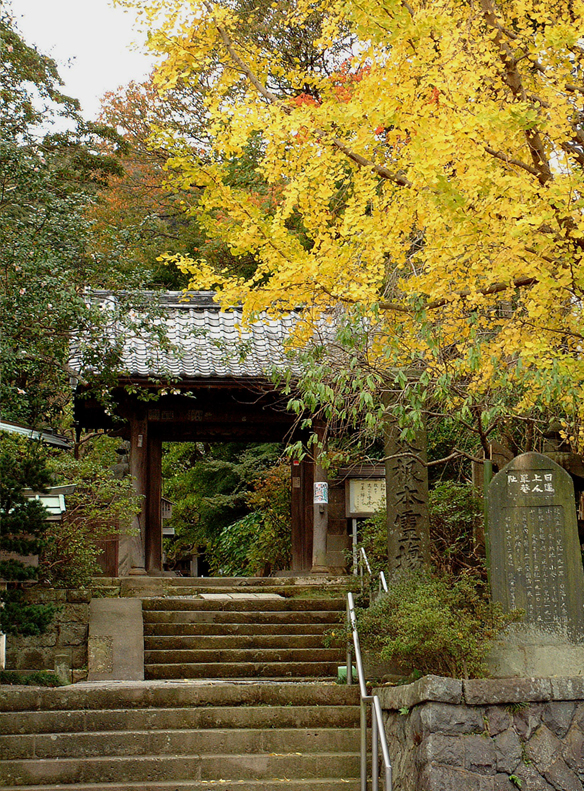
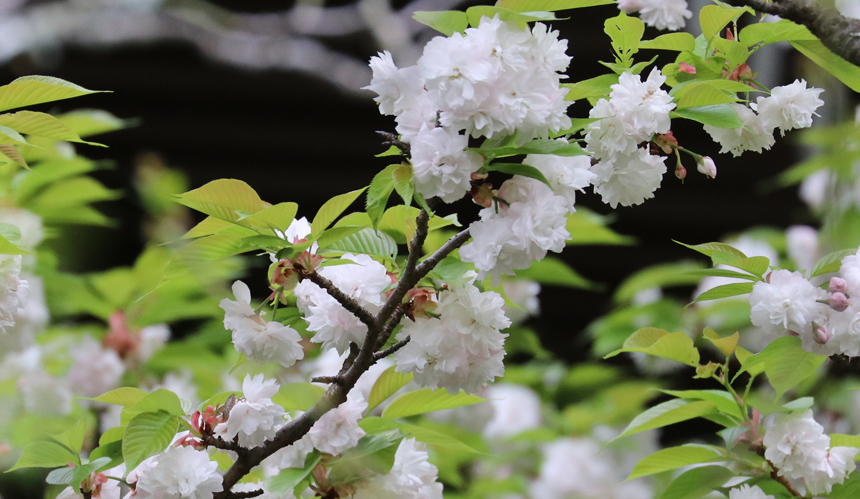
Information
Tour of the Grounds of Ankokuronji Temple
Welcome to Ankokuronji Temple, a place steeped in history and the profound legacy of Founder Nichiren. This temple stands on the very ground where Nichiren established his first grass hut in Kamakura, serving as a pivotal site for the propagation of his teachings. As you explore the temple grounds, you will discover numerous spots directly connected to his life and enduring achievements. We invite you to walk in his footsteps, reflecting on his journey and the profound impact he made. The Main Hall and Kumao-den are open for worship, offering a serene space for contemplation, except during special religious ceremonies. Should you wish for a deeper understanding, we also offer special guided tours upon request. Please do not hesitate to inquire if you are interested in learning more.
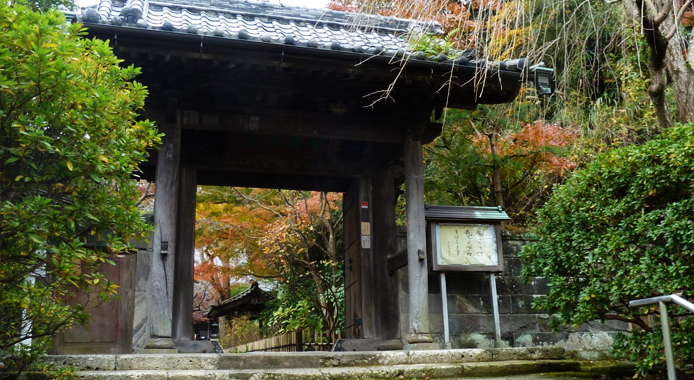
Sanmon (Temple Gate)
This is a typical Chinese-style shikyakumon (four-legged gate) from the pre-modern period, rebuilt by the Owari Tokugawa family in 1746. It stands as the oldest wooden structure within the temple grounds. Notably, the inscription 'Ankoku-hokutsu' gracing the gate was penned by Sasaki Bunzan in 1691, predating the gate's construction by a short period.
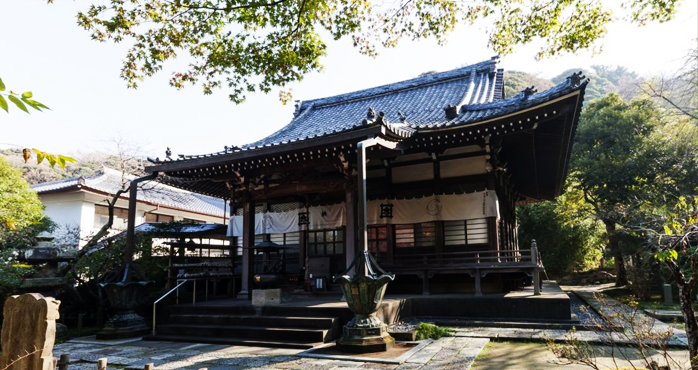
Hondo (Main Hall)
Though relatively recent, having been rebuilt in 1962, the Main Hall boasts an unusual and striking design: it stands entirely without internal pillars. This innovative architecture creates a space that feels both sacred and remarkably spacious and open. The primary object of worship here is the Great Mandala of the Ten Realms, with a statue of Nichiren Shonin enshrined before it. The statue depicts him looking as young and vigorous as he was when he penned Risshō Ankoku Ron.
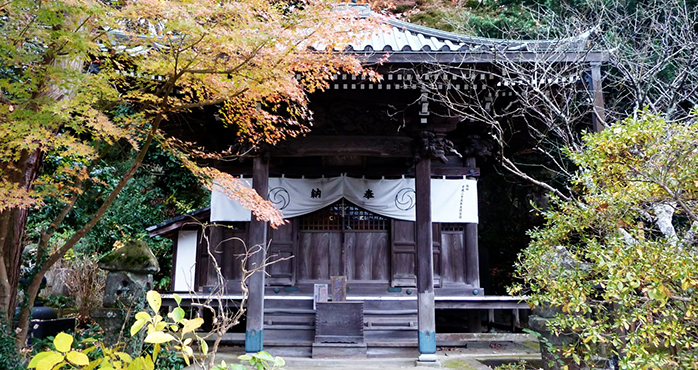
Gosho-an (Small Hall)
Gosho-an serves as a worship hall for the Gohōkutsu (Sacred Cave), with which it is connected by a corridor. This magnificent hall, constructed entirely of zelkova wood, was a generous donation from the Owari Tokugawa family at the end of the Edo period (1603–1868).
[ Not open to the public ]
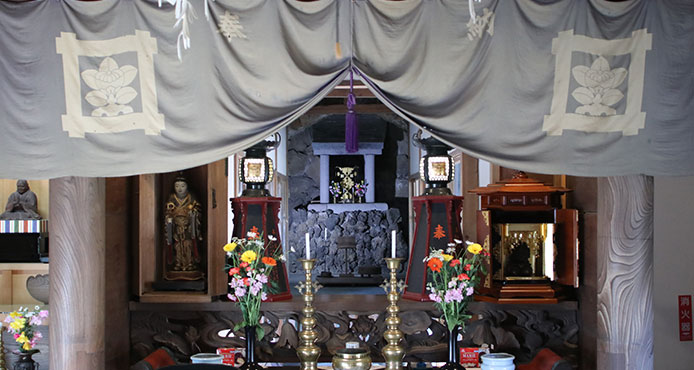
Gohōkutsu (Sacred Cave)
The Gohōkutsu is a sacred rock cave located behind the Gosho-an. This significant site is where Nichiren Shonin once resided, and it is traditionally believed that he composed his pivotal work, *Risshō Ankoku Ron*, within this very cave.
[ Not open to public ]
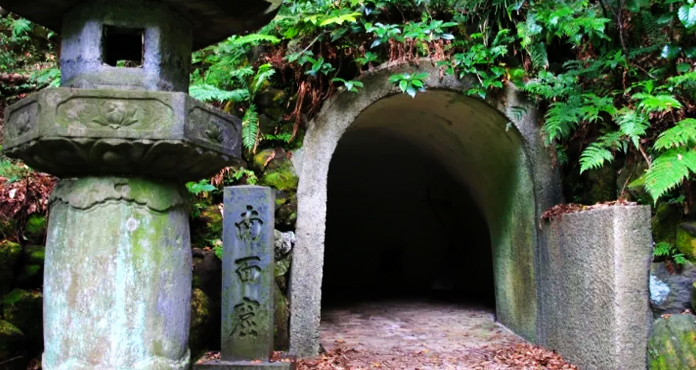
Nanmen-kutsu (South-Facing Cave)
The Nanmen-kutsu Cave is the site where Nichiren Shonin took refuge during the Matsubagayatsu Persecution. According to tradition, he was guided by white monkeys—believed to be messengers of the Mountain King—to escape the attack and spend the night here. This cave is located halfway up the hillside, next to the cremation site of Nichirō Shonin. Legend has it that after dawn, the white monkeys led him once more along the ridge, allowing him to escape safely to the present-day Hōshō-ji Temple.
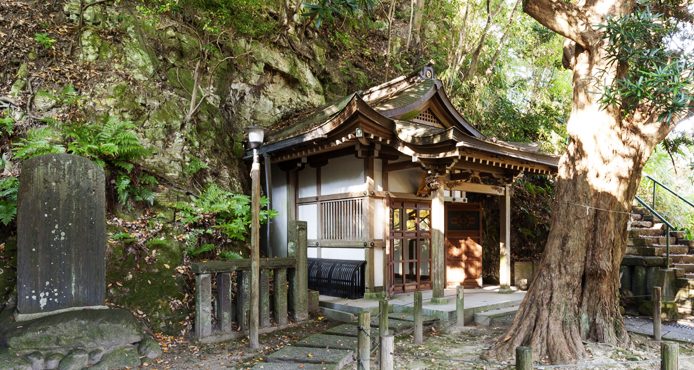
Kumao-den (Kumao Hall)
This hall is dedicated to Kumao Daizenjin, enshrined by Kumaomaru, a devoted follower of Nichiren Shonin. It is believed to offer blessings for various ailments, including menopausal symptoms, eye diseases, and toothaches, which historically attracted a multitude of worshippers. The current hall, subtly nestled into the rock face, was built in 1994.
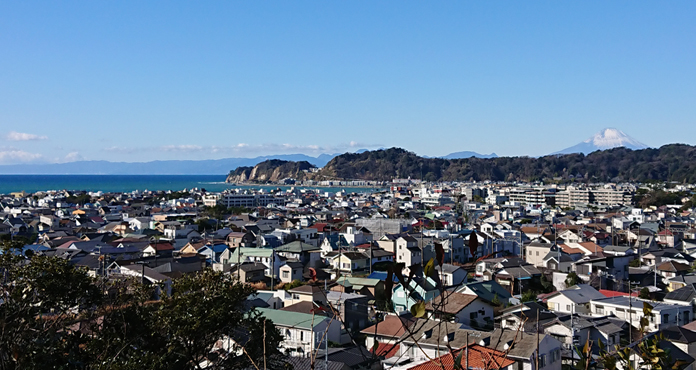
Fujimidai (Mt. Fuji Scenic Point)
Ascend the steep steps next to Kumao-den to Fujimidai, which offers panoramic views stretching from Kamakura Station to Yūigahama Beach, with the Izu Peninsula and Oshima Island visible in the distance. On clear days, Mount Fuji can be seen from this spot, where Nichiren Shonin is said to have chanted the Odaimoku. Continue along the ridge to the shōrō (bell tower), which houses the Risshō Ankoku no Kane (Bell of Risshō Ankoku), and then onward to the Nanmen-kutsu. This 15-minute circular route, starting and ending at the Main Hall, provides a reflective journey through the time of Nichiren Shonin.
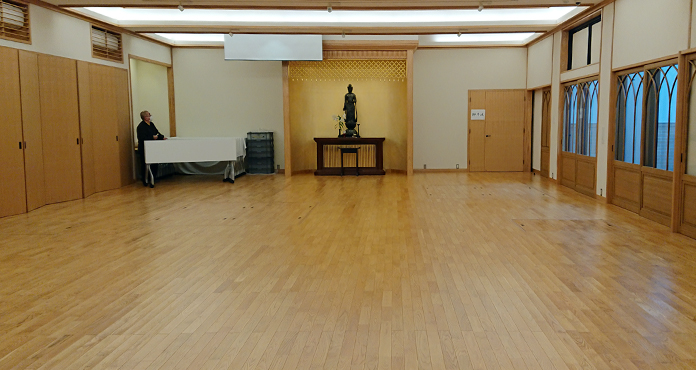
Kannon-dō (Kannon Hall)
Built in 2015, this hall is dedicated to Namu Saiwai Kanzeon Bosatsu. It also functions as a versatile social hall with a capacity of approximately 100 people, hosting events such as post-service refreshments, cultural classes, corporate meetings, and other gatherings. Notably, the archaeological remains of a samurai residence dating from the late Kamakura period are preserved in its basement.
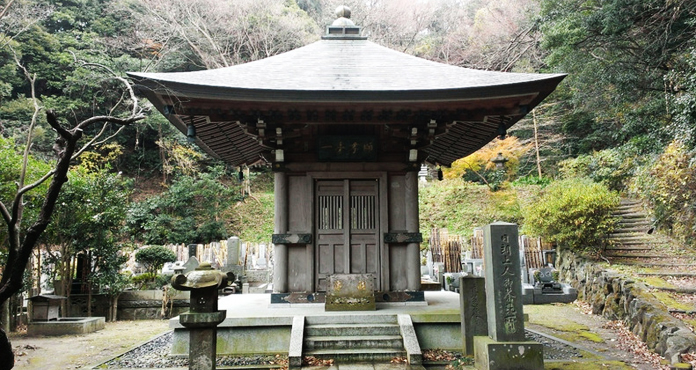
Nichirō Shonin Crematorium
Nichirō Shonin, a devoted disciple of Nichiren Shonin from Matsubagaya, served with exceptional dedication, becoming a leading figure among his master's followers. Nichiren Shonin even named him one of his six principal successors. Upon his death in 1320, Nichirō Shonin requested cremation at the place of his ordination. His remains were brought from Ikegami to this very spot, which is now recognized as his cremation site. The current structure was built in 1982.
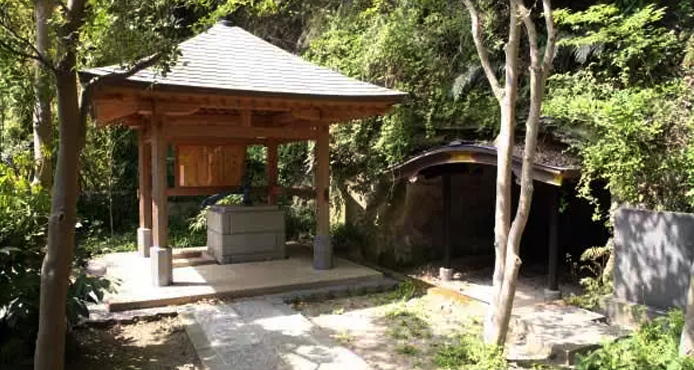
Keshō-kutsu (Cave of Evil Spirits) &
Suzuri-mizu no Ido (Ink-Stone Well)
Nestled in an enclave of the temple precinct is Keshō-kutsu, also known as Keshō-iwaya. This site was once troubled by mischievous evil spirits. Upon his arrival in Kamakura, Nichiren Shonin chanted and offered blessings here, successfully dispelling them. It is said he spent his very first night at this spot. Adjacent to Keshō-kutsu is Suzuri-mizu no Ido (the Ink-Stone Well). Legend has it that Nichiren Shonin used water from this well to prepare his ink when writing his pivotal work, Risshō Ankoku Ron. Both the cave and the well were renovated in 1997.
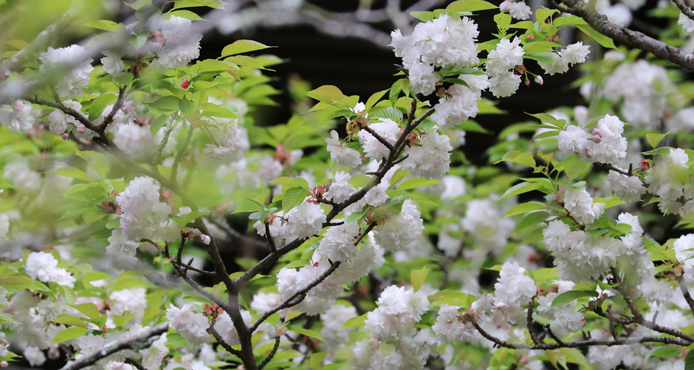
Myōhō-zakura (Ancient Cherry Tree)
On the right side of Gosho-an stands an ancient cherry tree known as Myōhō-zakura, a name that translates to 'cherry of the wonderful Dharma.' Legend has it that this very tree grew from the staff of Nichiren Shonin when he planted it in the ground, which is why it is also affectionately called Otsue-zakura ('cherry of the staff'). This significant tree has been designated as a natural monument by Kamakura City.
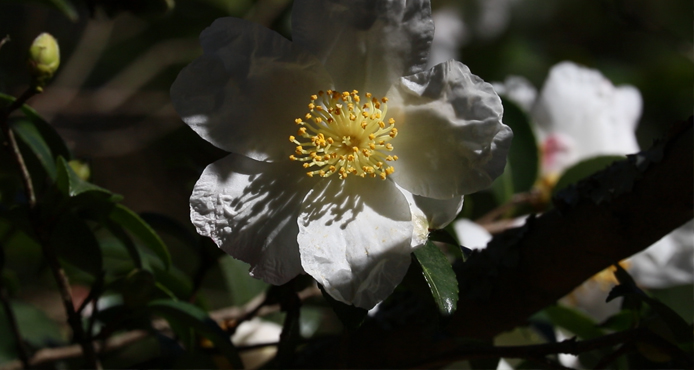
Sasanqua Camellia
Natural Monument of Kamakura City
Every year, typically in mid-November, the sasanqua camellias at the temple begin to display their beautiful white blossoms. The sasanqua tree located on the left in front of the Main Hall is particularly notable; it is a famous specimen that still retains the characteristics of varieties bred and improved during the mid-Edo period. This historical tree has been designated as a natural monument by Kamakura City.

About Visiting the Temple
Please be mindful of your health condition before visiting, and kindly refrain from visiting if you feel unwell or have a fever. We also ask that you visit in small groups. Thank you for your cooperation.
Temple Opening Hours & Admission:Opening Hours: 9:00 AM to 4:30 PM (Gates open at 9:00 AM and close at 4:30 PM) Regular Closures: Closed on Mondays (open if Monday falls on a national holiday) Admission Fee:100 yen per person (cash only) Accessibility: Visitors presenting a disability certificate, along with one accompanying caregiver, are admitted free of charge.
Special Visits, Practice, and Dharma Talks
At the temple, visitors can choose between general self-guided visits and special guided experiences led by a sanmuin* or other temple staff. We also offer special sessions providing practice instruction and Dharma talks led by English-speaking monastics.Advance reservation is required for all special visits, retreats, and Dharma talks. For more information or to make arrangements, please contact us in advance.
Note on Sanmuin: A sanmuin is a staff member who handles general administrative and temple affairs at a Buddhist temple.- General Visit: 100 yen per person. No group discounts are available; however, admission is free for visitors presenting a disability certificate, along with one accompanying caregiver.
- Special Visit: 500 yen per person (approx. 45 minutes). Includes a guided tour of temple treasures and areas normally closed to the public.
- English-Language Tour: 500 yen per person (approx. 45 minutes). A special guided tour of the temple grounds conducted in English by the chief priest.
- Shodaigyō and Dharma Talk: 500 yen per person (approx. 45 minutes). Includes instruction in Buddhist chanting practice and a Dharma talk by the chief priest.
- English Practice and Dharma Talk: 5500 yen per person (approx. 45 minutes). Includes instruction in Buddhist chanting practice and a Dharma talk conducted in English by the chief priest.